


Sleepco
At-Home 3-Night Polysomnographic Sleep Study
At-Home 3-Night Polysomnographic Sleep Study
Couldn't load pickup availability
By purchasing this service: The buyer agrees to our sleep study terms and conditions
High quality technical sleep study meeting ASA standards with additional features; interpretation by your doctor recommended.
If you are experiencing sleep-related issues or suspect you may have a sleep disorder, our Level 3 at-home sleep study offers detailed insight into your sleep quality and patterns that may be contributing to any disturbances.
This test provides more detailed technical information than a Level 4 study, giving your healthcare provider a clearer picture of your sleep-disordered breathing patterns to support clinical assessment and diagnosis. A bond may be required for this sleep study. Please note that all payments, including bonds, are processed and maintained in New Zealand Dollars (NZD). For international customers, the amount received upon bond return may differ from the original payment amount due to exchange rate fluctuations, regardless of payment method used (credit card, bank transfer, etc.).
Ideal for:
- Individuals with suspected sleep apnoea or other sleep-disordered breathing
- Those experiencing chronic snoring, gasping, or choking during sleep
- People with unexplained daytime fatigue or excessive sleepiness
- Anyone looking for a detailed sleep-disordered breathing assessment without visiting a sleep lab
What it measures and estimates:
- Indices used to estimate the presence and severity of sleep apnoea (obstructive and central)
- Respiratory effort and airflow patterns during sleep
- Blood oxygen levels (SpO2) during sleep
- Heart rate variations and patterns that may suggest cardiac arrhythmias (requires clinical correlation)
- Body position and movement throughout the night
- Patterns suggestive of Cheyne-Stokes respiration
- Hypopnoea events and estimated respiratory effort-related arousals (RERAs - approximated without EEG)
- Indicators that may suggest upper airway resistance syndrome (UARS) - further investigation may still be required
- Patterns that may be consistent with sleep-related hypoventilation - formal diagnosis requires medical assessment and, in many cases, in-laboratory testing
Benefits over Level 4 sleep test:
- Measures airflow and respiratory effort, providing more accurate data on apnoea events than oximetry-only screening
- Detects body position and movement, offering insights into positional effects on breathing and sleep quality
- Ability to differentiate between obstructive and central apnoeas using respiratory effort and airflow channels
- Provides a more comprehensive picture of sleep-disordered breathing patterns and nocturnal oxygenation
- Offers more detailed technical data to support your doctor's diagnosis and treatment planning
Level 3 Study with Video and Audio Channel
Enhance your Level 3 sleep study with synchronised video and audio recording capability. This advanced channel adds a visual and auditory dimension to your sleep assessment, capturing real-time footage and sound throughout the night alongside all standard Level 3 measurements. It does not replace in-laboratory polysomnography but can provide additional behavioural context for your doctor.
Additional Benefits of Video and Audio Channel
- Visual documentation of sleep behaviours, body movements, and positioning changes that may correlate with respiratory events
- Audio recording captures snoring intensity, gasping sounds, breathing irregularities, and vocalisations
- Time-stamped synchronisation with physiological data allows clinical staff to visually review respiratory events in context
- Supports recognition of behaviours suggestive of parasomnias such as sleepwalking, REM sleep behaviour disorder, night terrors, and bruxism (formal diagnosis still requires specialist evaluation, often with in-lab EEG and EMG)
- Technicians can verify sensor displacement or artefacts by reviewing footage, helping to ensure data integrity
- Objectively documents events that bed partners may report, such as witnessed apnoeas or unusual movements
Behavioural patterns that can be visually documented with Video and Audio
- Behaviours that may be consistent with REM Sleep Behaviour Disorder (RBD) and dream enactment (diagnosis requires specialist assessment and, in many cases, in-laboratory EEG and EMG)
- Observable behaviours suggestive of parasomnias including sleepwalking, sleep talking, and confusional arousals
- Movements or events that may raise suspicion for nocturnal seizure activity or epileptic events (not a substitute for neurological evaluation)
- Visible and audible evidence of possible bruxism (teeth grinding) episodes
- Leg movements that may be consistent with periodic limb movement disorder (PLMD) but are not sufficient for formal diagnosis
- Behaviours suggestive of sleep-related eating disorder episodes
- Positional snoring patterns and visible signs of upper airway collapse
- Behaviours and vocalisations that may be consistent with night terrors or nightmare disorder
Comparison: Standard Level 3 vs. Level 3 with Video and Audio
| Feature | Standard Level 3 | Level 3 + Video/Audio |
|---|---|---|
| Respiratory airflow monitoring | Yes | Yes |
| Blood oxygen saturation (SpO2) | Yes | Yes |
| Heart rate monitoring | Yes | Yes |
| Respiratory effort measurement | Yes | Yes |
| Body position detection | Yes | Yes |
| Obstructive vs central apnoea differentiation | Yes | Yes |
| RERA detection | Limited (estimated - no EEG) | Limited (estimated - no EEG, video provides context) |
| REM Behaviour Disorder detection | Limited (observational only) | Enhanced observational detail (no EEG or EMG - not diagnostic) |
| Visual sleep behaviour recording | No | Yes |
| Audio snoring analysis | No | Yes |
| Parasomnia visual documentation | No | Yes (observational only) |
| Bruxism identification | No | Visual and audio evidence only |
| Seizure activity visualisation | No | Yes (observational only - not diagnostic) |
| Event-synchronised playback | No | Yes |
| Sleep talking or vocalisation capture | No | Yes |
What is included in the study:
- Sleep study data report analysed with state of the art software designed to meet or exceed Australasian Sleep Association (ASA) technical standards for Level 3 home sleep study reporting
- 4 page breakdown of the report and data for easier understanding
- 4 page PSG style summary per night recorded (total 12 pages of technical report data)
- For Video/Audio channel: additional behavioural observations summary and time stamped event annotations
The overnight study:
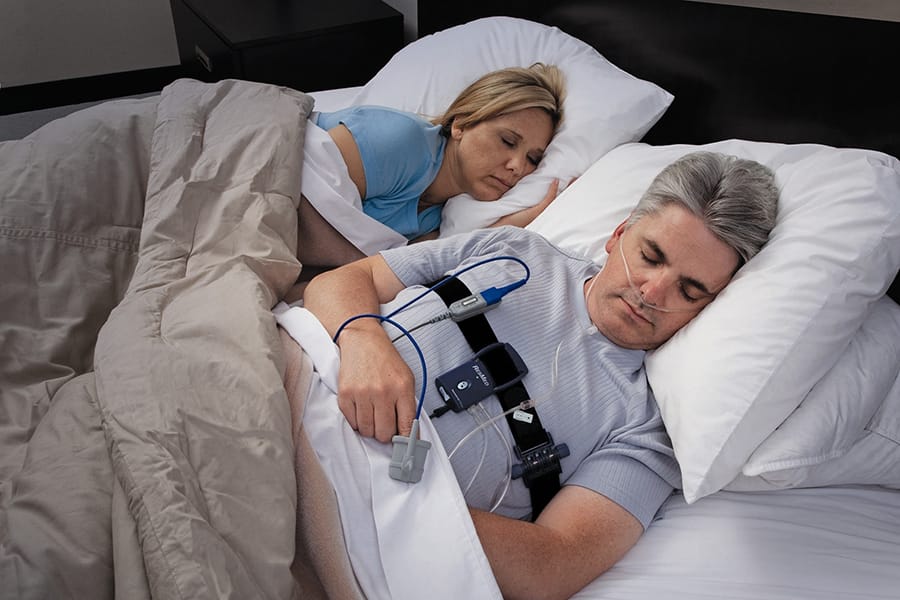
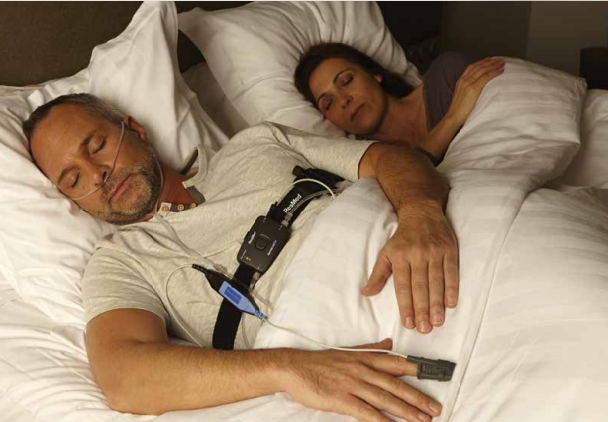
- Set up the device before bedtime (includes nasal cannula, chest belt, and finger sensor)
- For Video/Audio studies: position the provided recording unit as directed in setup instructions
- Wear the sensors throughout the night
- Return the device the next day for analysis
Preparation:
- Avoid caffeine and alcohol before the test where possible, unless advised otherwise by your doctor
- Follow your regular sleep routine as much as practical
- Ensure all sensors are securely attached (detailed instructions will be provided)
- For Video/Audio studies: ensure adequate lighting for infrared recording (instructions provided)
- If you have any sleep dependencies, such as a certain medication or a certain amount of alcohol before going to bed, please let us know so that this can be documented for your doctor.
Important Information:
A Level 3 sleep study provides more comprehensive data than a Level 4 test, enabling a more detailed assessment of sleep-disordered breathing. This technical information helps your healthcare provider determine whether a sleep disorder is likely and what further investigations or treatments may be appropriate. It does not, by itself, replace a full clinical assessment or in-laboratory polysomnography where these are indicated.
The addition of synchronised video and audio recording can provide near laboratory style behavioural context by capturing visual and auditory information that physiological sensors alone cannot detect. This is particularly valuable for patients with suspected parasomnias, movement disorders, or complex sleep behaviours, but does not replace in-laboratory EEG and EMG monitoring where required.
Early recognition and treatment of sleep disorders can significantly improve your overall health, energy levels, and quality of life. If you are experiencing persistent sleep issues or daytime fatigue, this Level 3 at-home sleep study offers a convenient and thorough way to obtain detailed technical information about your sleep to share with your doctor without the need for an overnight stay in a sleep lab.
Important Medical Notice
Sleepco is not a medical practice. Sleepco does not employ sleep physicians, sleep specialists, respiratory physicians, or medical doctors of any kind.
This Level 3 at-home polysomnographic sleep study and any associated video and audio channel are technical investigations only. Sleep study reports are technical documents produced by automated analysis software (vendor developed systems and Anthropic powered software) and reviewed for data quality and accuracy by a qualified medical technologist holding at least a Bachelor of Health Science (BHSc). These reports do not constitute a medical diagnosis, clinical assessment, or treatment prescription.
Sleepco uses advanced, state of the art automated scoring and Anthropic powered report generation software with a structured review process designed to meet or exceed Australasian Sleep Association (ASA) technical standards for Level 3 home sleep study reporting.
All findings, indices, and observations contained in a Sleepco report are provided solely to support informed discussions with your healthcare provider. Any clinical decisions - including diagnosis of sleep disorders, initiation of treatment, prescription of CPAP/APAP/BiPAP therapy, oral appliance therapy, surgical referral, or other therapeutic interventions - remain the exclusive responsibility of a qualified physician or sleep medicine specialist, who must interpret this report alongside your full medical history, examination, and any additional investigations.
Level 3 home sleep studies have important technical limitations compared with in-laboratory Level 1 or Level 2 polysomnography. They do not include EEG sleep staging, cannot reliably detect all arousals or non-respiratory sleep disorders (such as parasomnias, periodic limb movement disorder, or nocturnal seizures), and a normal or near normal result does not exclude a clinically significant sleep disorder. Your doctor may still recommend in-laboratory testing where clinically indicated.
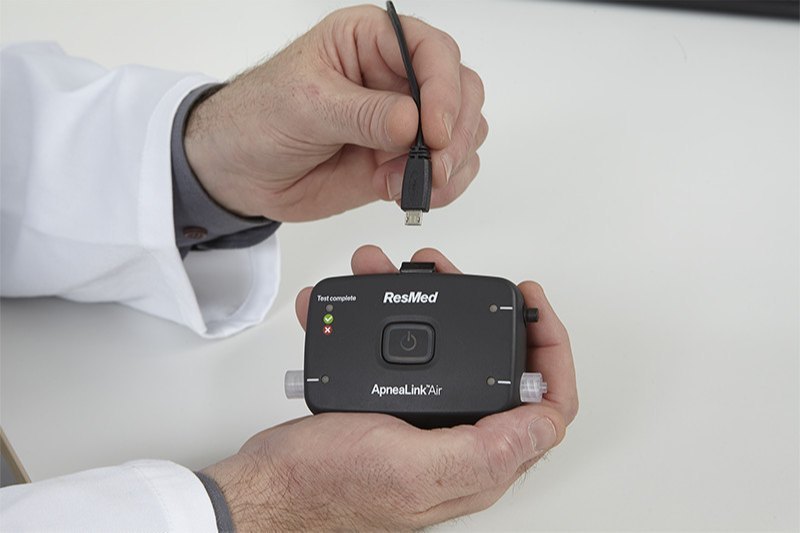
Photos displayed are for demonstration purposes only and the specific polysomnographic hardware used during your study may vary from images shown. All payments and bonds are processed in New Zealand Dollars (NZD). International customers should note that amounts received upon bond return may differ from the original payment due to exchange rate fluctuations.
For studies that include video and audio recording, all recordings are encrypted, stored securely in accordance with applicable privacy legislation, and accessible only to authorised Sleepco clinical and technical staff. Recordings are used solely for technical analysis and quality assurance and are managed according to our data retention and privacy policy.
Important Disclaimer
Important Disclaimer
By ordering this sleep study product, you acknowledge that you are responsible for returning the equipment to SleepCo in its original condition. You will be required to cover the cost of any delivery fees associated with the return.
Additionally, you assume full responsibility for any damages caused to the equipment while in your possession. If the equipment is damaged or lost, you agree to be invoiced and pay for any resulting costs or losses.
By proceeding with your order, you accept our terms, conditions and agreement of service.
Share
The unit was very easy to use and the instructions were clear and easy to follow. I'm interested to find out the results!